My Art, My Rules
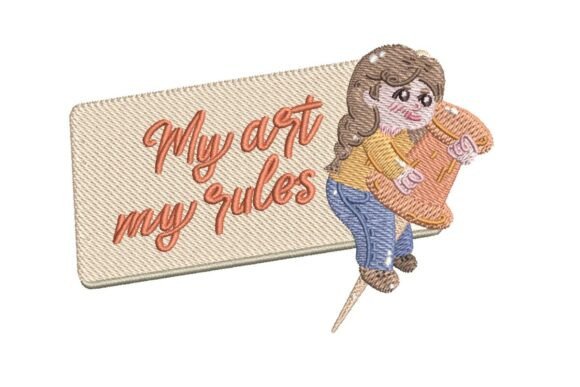
The My Art, My Rules machine embroidery design is a charming and expressive piece that captures the essence of creative independence. With its whimsical, illustrated character and long, wavy brown hair, it exudes a playful yet sophisticated vibe that could easily become a standout in any handmade or craft fair product lineup.
First Impressions: Whimsical and Empowering
From the moment you lay eyes on My Art, My Rules, it feels like a celebration of individuality and artistic freedom. The design has a soft, handcrafted aesthetic that leans into the whimsical side of embroidery. It’s not overly bold or flashy, but it carries enough visual interest to catch the eye at a glance. This makes it ideal for those looking to add a touch of personality to their craft fair product or handmade product displays.
The design’s charm lies in its simplicity and clarity. It doesn’t overwhelm with intricate details, which means it can be adapted to a wide range of items without losing its appeal. Whether you’re working on a tote bag design, an apron embroidery, or a tea towel embroidery, the character remains recognizable and engaging.
Where My Art, My Rules Shines
My Art, My Rules excels when used as a focal point on larger items like tote bags, market bags, and pillow covers. Its size and style make it perfect for center-stage placement, where it can draw attention and spark conversation. On smaller items like embroidered patches or fabric pouches, it still holds up well, especially when paired with complementary color schemes.
For Etsy sellers or small shop product creators, this design offers versatility. It works equally well as a printable mockup for online listings or as a digital embroidery file for customers who want to personalize their own items. Its clean lines and limited color palette also make it easy to photograph for commercial embroidery or finished product listings.
Practical Selling and Production Considerations
One of the key strengths of My Art, My Rules is its ease of use. It’s straightforward to understand at a glance, which is essential for quick decision-making at a craft fair booth. Whether you're displaying it on a sample cap or a market bag, customers can immediately grasp the design’s appeal.
This design also performs well at different sizes. It can be scaled down for small accents or expanded for large focal points, giving you flexibility in how you incorporate it into your product line. However, keep in mind that very small versions may lose some detail, so it's best to test it on various sizes before finalizing your designs.
When it comes to stitch density, My Art, My Rules seems to strike a good balance. It’s not overly dense, which helps prevent puckering on delicate fabrics. That said, if you're working with thick or textured materials like towels or dark fabrics, you may need to adjust your stabilizer or hoop size to ensure the design stays crisp and clear.
Careful-Use Notes for Embroidery Designers
While My Art, My Rules is generally user-friendly, there are a few things to keep in mind. Tiny details, such as the character’s facial features or clothing textures, might not hold up well on very small items or when using light-colored threads. If you're planning to use this design on a curved cap surface, you may need to adjust the hoop setup or consider alternative placement options.
Also, since the design includes small lettering, it's important to check that it remains legible when scaled. If you're working with a thick fabric or a textured towel, you may need to increase the stitch count slightly to maintain definition.
Impact on Visual Appeal and Customer Engagement
My Art, My Rules has a strong visual presence that can elevate the overall look of your sewing crafts. It adds a personal, handmade touch that resonates with customers looking for unique, meaningful products. Its design is both decorative and functional, making it a great fit for handmade gifts or booth samples.
From a brand consistency standpoint, this design can serve as a signature piece that reinforces your creative identity. It’s also excellent for booth display strength, as it draws people in and encourages them to explore other items in your collection. For commercial embroidery or digital embroidery file sales, it offers a solid foundation for building a cohesive set of design assets.
Embroidery Designer Tips for Success
Before committing to mass production, I recommend testing My Art, My Rules on scrap fabric to see how it looks in different thread colors and fabric textures. Pay close attention to stitch density and spacing, and make sure the design scales well for your intended use cases.
Creating at least one real mockup is also crucial. Seeing the design on an actual item—like a cap or apron—can help you identify any issues that might not be apparent on a computer screen. Comparing fabric colors and checking for contrast will ensure the design stands out in your product lineup.
Finally, always confirm the commercial licensing terms before selling finished products. While the description mentions celebrating creative independence, specific usage rights may vary depending on the source of the embroidery file.